
The Other Side of Cancún
Three thousand hectares of silence, Mayan cosmovision, two hundred bird species, and an ecosystem that sustains the entire Caribbean. The side of Cancún almost no one knows.
The Other Side of Cancún
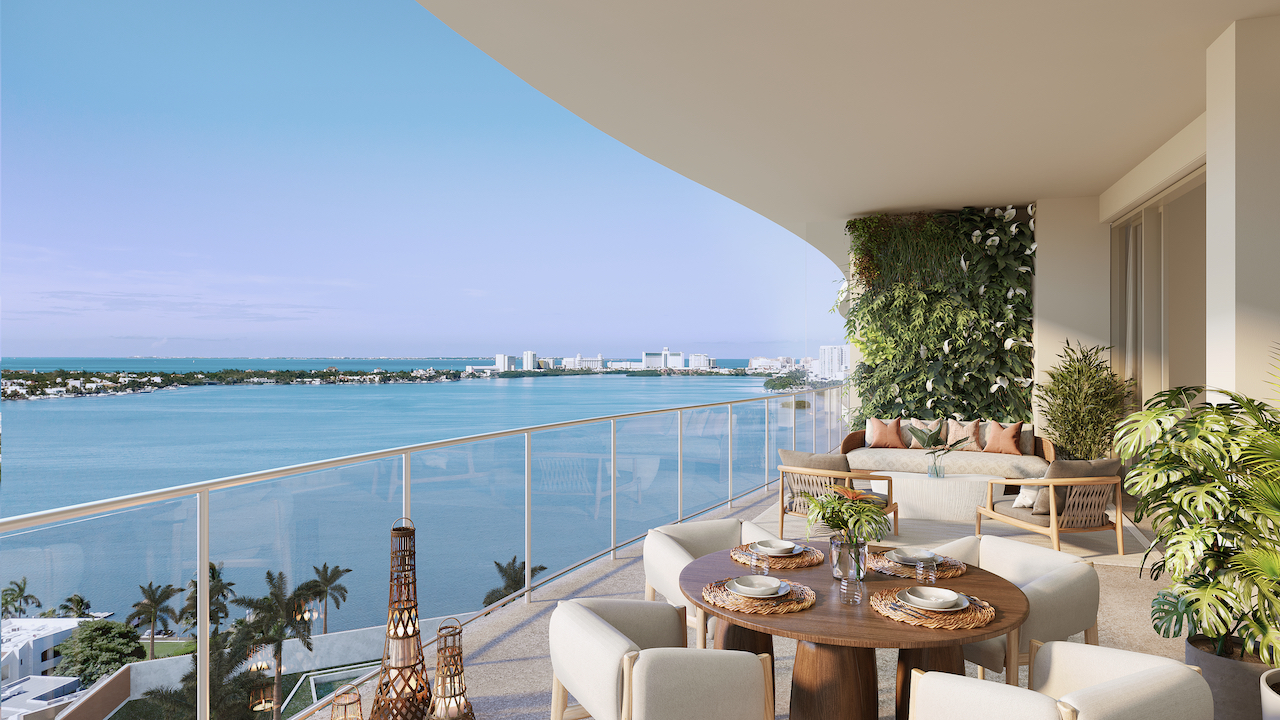
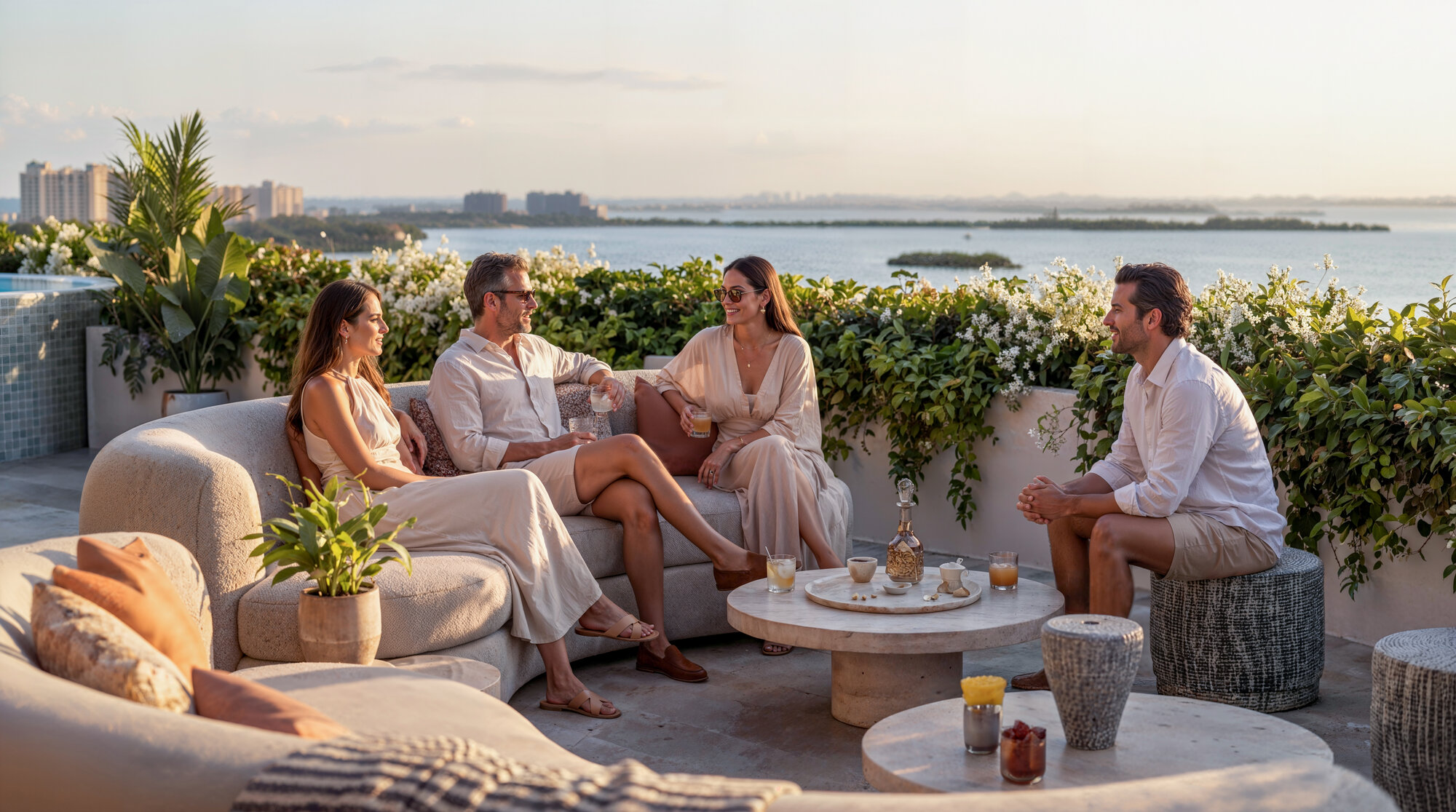
Most people come to Cancún chasing blue. The Caribbean, the postcard, the line where the sky dissolves into the sea. But if instead of walking toward the beach you cross to the other side of the boulevard, the landscape changes completely. The noise fades. The water goes still. And something appears that almost nobody expects to find here: an ancient silence.
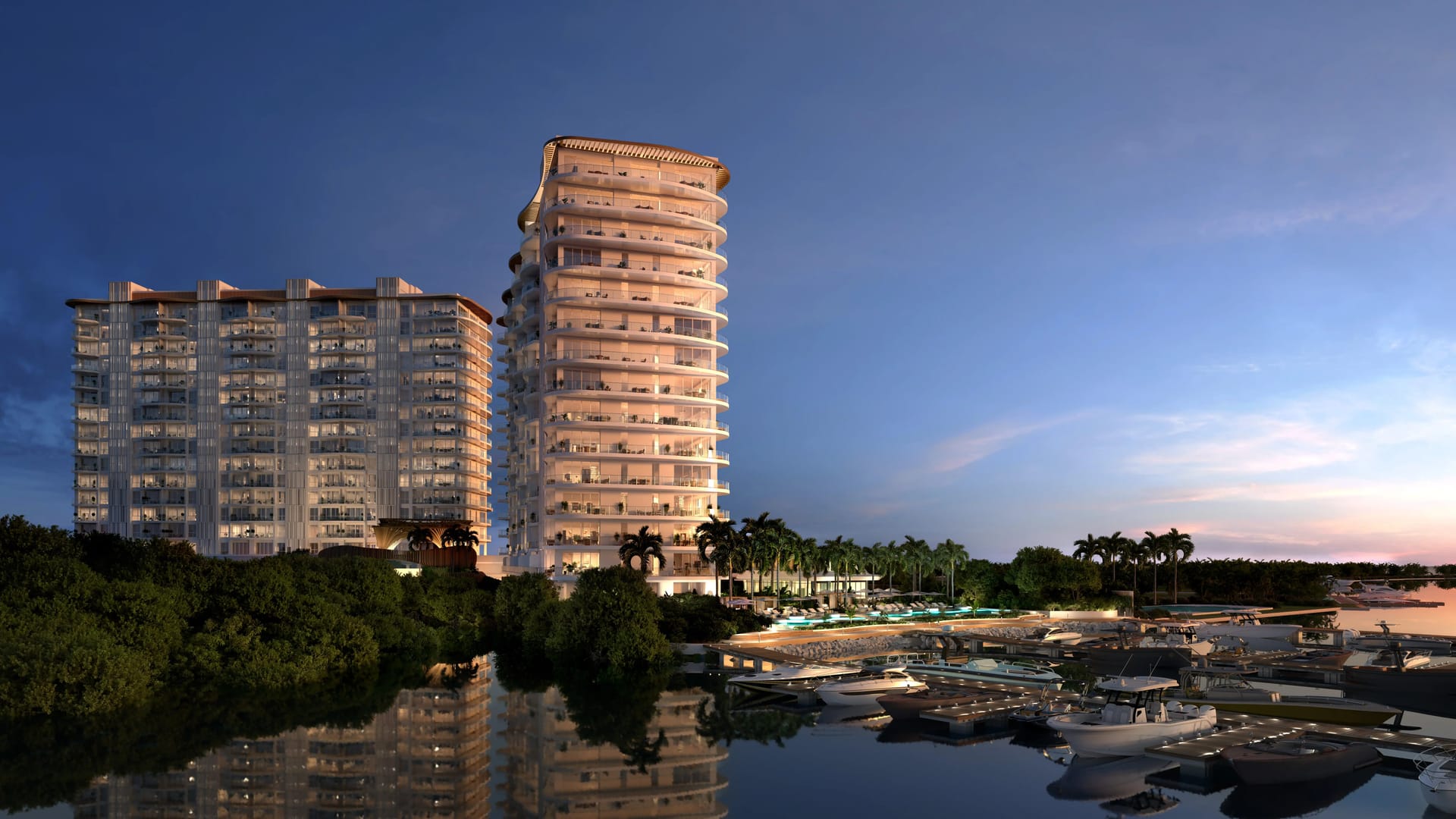
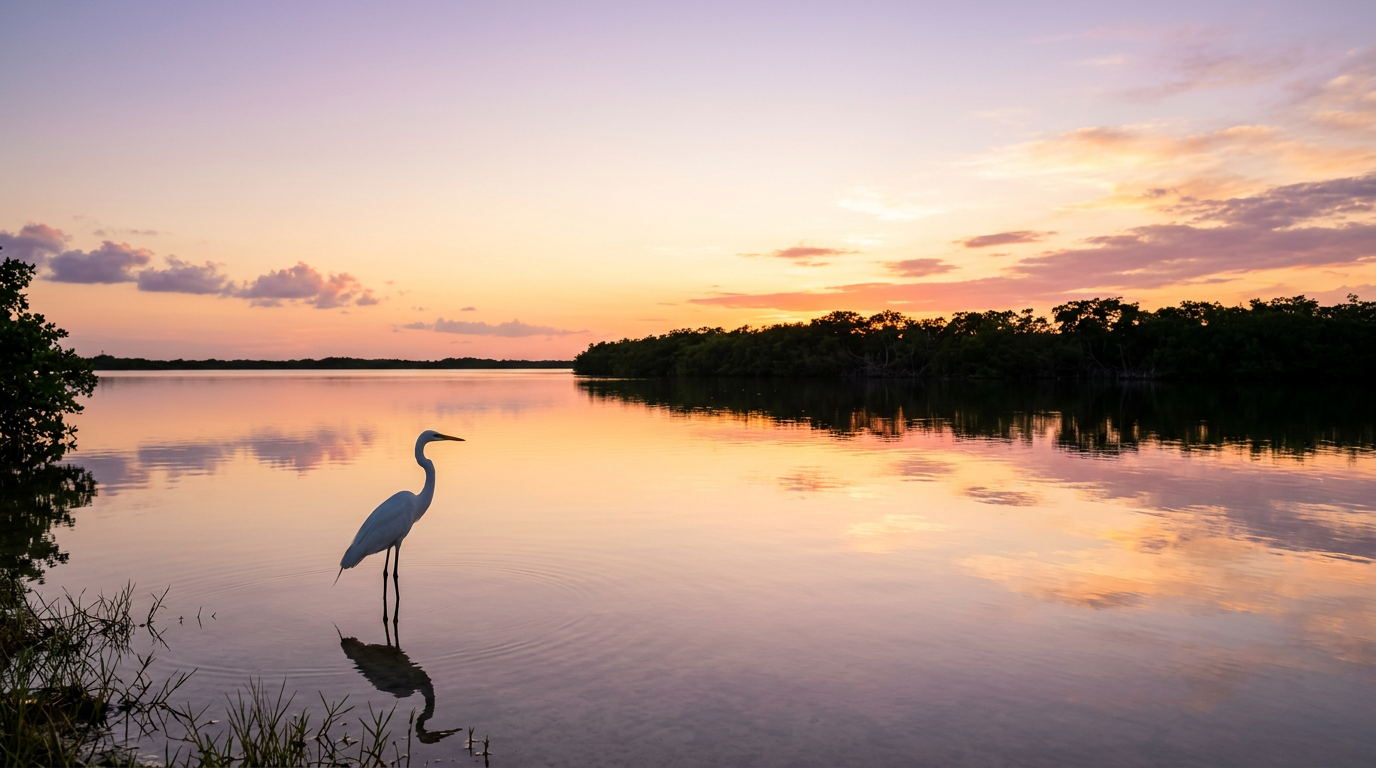
Laguna Nichupté does not appear in travel guides. It has no destination tag or hashtag of its own. And yet it occupies more than three thousand hectares of still water in the very heart of the Hotel Zone — an enormous mirror that reflects every sunset as if the sky had a downstairs.
What the Maya Already Knew
For the Maya civilization, water was not a resource. It was a threshold.
The cenotes — those limestone sinkholes scattered across the Yucatán Peninsula — were considered portals to Xibalbá, the underworld. Places where the visible and the invisible touched. The Maya built their cities around bodies of water not out of convenience, but out of reverence: water was the dwelling of Chaahk, god of rain, and of forces that were not named lightly.
Coastal lagoons like Nichupté held a special place in that cosmogony. They were zones of transition — neither sea nor land, neither fresh nor salt — where the boundaries of the known world blurred. In Mesoamerican cosmovision, water represented fertility, the feminine, the origin. Still bodies of water were mirrors of the night sky: if the cenotes were the entrance to the underworld, the lagoons were its reflection on the surface.
That sacredness was not metaphor. The pre-Hispanic settlements in the area — El Rey, El Meco, San Miguelito, Yamil Lu'um — rose near the lagoon's water. The lagoon gave them fish, salt, inland navigation routes, and something harder to quantify: a symbolic order that organized their entire spiritual life.
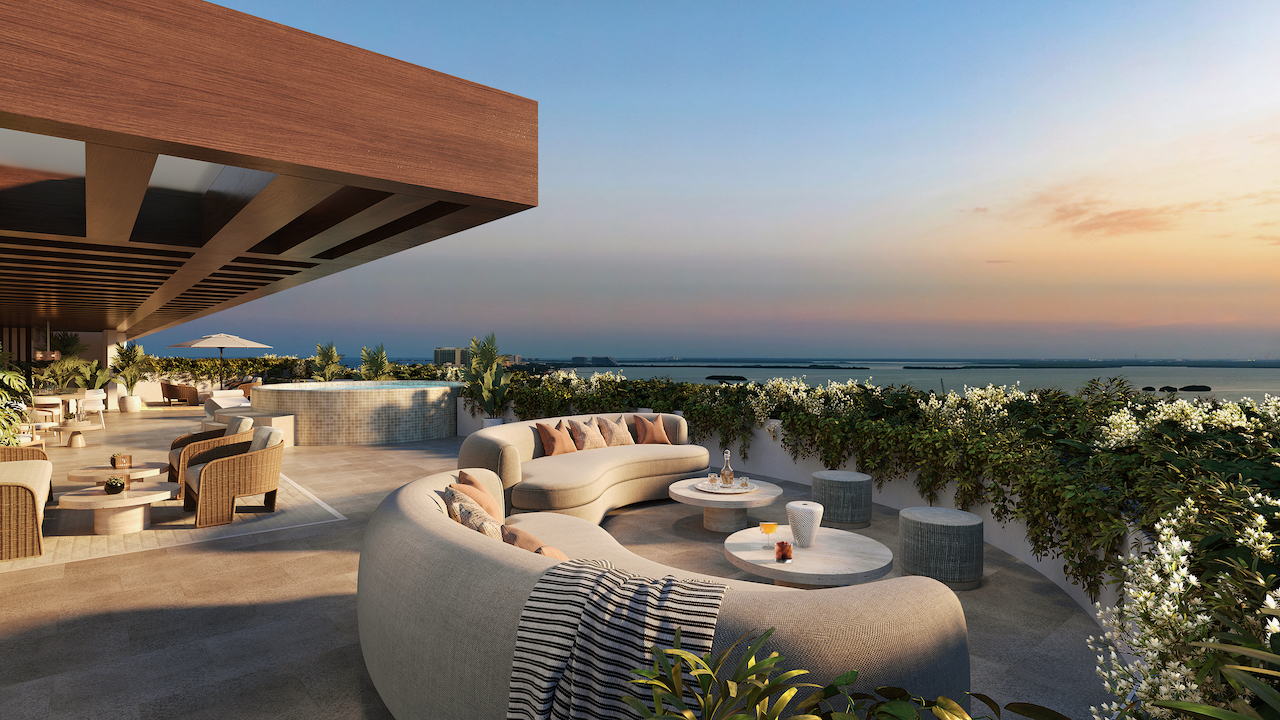
Today, when you cross the boulevard at sunset and watch the lagoon catch fire in orange, you are looking at the same mirror the Maya read as a boundary between worlds.
An Ecosystem That Sustains the Caribbean
In 2008, the Mexican federal government established the Manglares de Nichupté Flora and Fauna Protection Area: 4,257 hectares (over 10,500 acres) of mangrove, lagoon, and coastal wetlands. A year later, the Ramsar Convention designated it site number 1777 on its list of wetlands of international importance.
The numbers are not ceremonial. They are a diagnosis of what this place sustains.
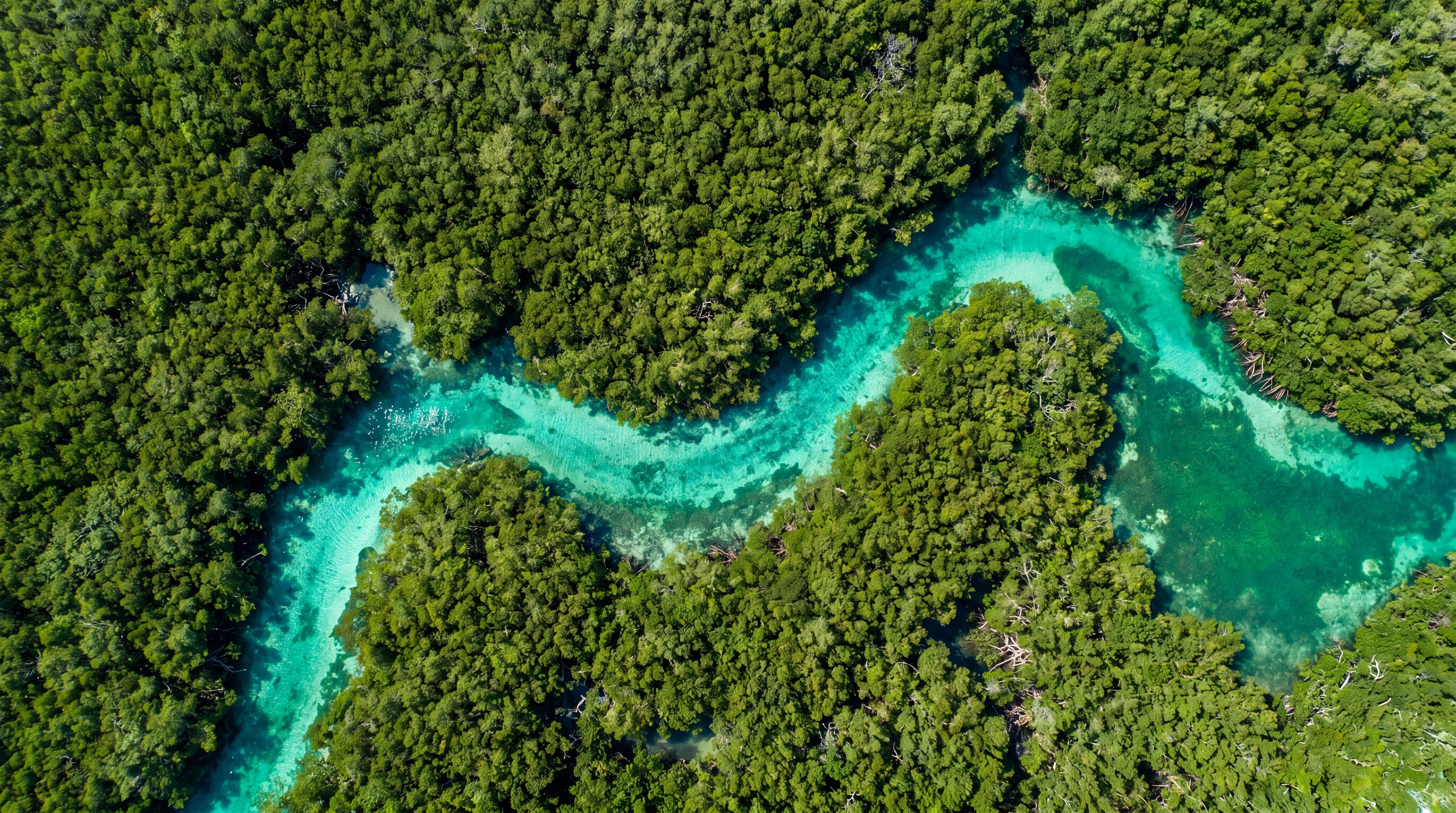
Four mangrove species coexist here: red (Rhizophora mangle), black (Avicennia germinans), white (Laguncularia racemosa), and buttonwood (Conocarpus erectus). Each occupies a distinct niche according to salinity and water depth, forming a vegetation gradient that functions as a biological filter of extraordinary precision.
The Nichupté mangroves filter sediments and nutrients flowing from the continent before they reach the sea. That function — invisible, silent, constant — is what maintains the clarity of the Mexican Caribbean's water. Without it, the Mesoamerican Reef System, the second-largest barrier reef on the planet after Australia's Great Barrier Reef, would receive a nutrient load that would accelerate its degradation.
Put another way: the turquoise transparency that millions of people come to photograph every year depends, in part, on what happens in this lagoon that almost no one visits.
Two Hundred Species Watch from the Mangroves
When biologists from the CONABIO monitoring program began surveying Nichupté's birdlife in 2015, they recorded 41 species. By 2023, the count exceeded two hundred.
It is not that the birds arrived. They were always there. What changed was that someone stopped to look.
Great blue herons (Ardea herodias) hunt in the inner channels at dawn. Brown pelicans (Pelecanus occidentalis) drop from fifty feet to fish. Ospreys (Pandion haliaetus) patrol the lagoon in slow circles, waiting for the flash of a mullet beneath the surface. Magnificent frigatebirds (Fregata magnificens) glide without moving their wings for hours on end, riding the thermal currents rising from the lagoon's heat.
Every winter, the lagoon receives visitors that have flown from Canada and the northern United States: belted kingfishers (Megaceryle alcyon), snowy egrets (Egretta thula), sandpipers and plovers escaping the boreal cold to feed in these tropical mangroves. The Mississippi Flyway — one of the four great migratory bird routes of the continent — passes directly over Nichupté.
Beneath the water, Morelet's crocodiles (Crocodylus moreletii) and American crocodiles (Crocodylus acutus) inhabit the deeper channels. These are reptiles that have been here far longer than any hotel, any road, any city. In the dry mangrove zones, black spiny-tailed iguanas (Ctenosaura similis) sun themselves on aerial roots, motionless as obsidian sculptures.
What the Hurricane Could Not Erase
In October 2005, Hurricane Wilma parked itself over Cancún for sixty hours. Sustained winds over 125 miles per hour. The lagoon overflowed. The mangroves were flattened.
Eleven years later, a reforestation study reported survival rates of 91% in replanted areas. The mangroves had returned.
This is not resilience in the motivational sense of the word. It is biology: an ecosystem that has survived thousands of hurricanes over millennia has recovery mechanisms that human engineering cannot replicate. Red mangrove roots trap sediment, build soil, create land where before there was only water. It is a process of slow, persistent creation, operating on a timescale entirely foreign to our own.
Mangroves also function as a natural barrier against storm surge. During Wilma, areas with intact mangrove cover suffered significantly less damage than areas where the mangrove had been removed. The lesson needs no explanation.
Forty Minutes
The sunsets over Laguna Nichupté last longer than normal.
This is not subjective perception. The lagoon's orientation — open to the west, with the low profile of the continental city as its only horizon — allows the sun to remain visible across a wider arc than on an east-facing beach. The water acts as a thermal mirror, and the mangrove's humidity creates a vapor layer that refracts light in tones ranging from amber to violet.
A sunset on the lagoon can last forty minutes. Sometimes more.
There is no surf. No foam. Only the surface of the water receiving light as if it were something solid, something you could pick up with your hands. That stillness has a documented effect on those who observe it — a form of well-being that architecture is only beginning to understand. The colors change so slowly that you do not notice they have changed until you look again.
The Other Side
Cancún's airport handles more than thirty million passengers a year. The vast majority cross the Hotel Zone looking east — toward the Caribbean, toward the blue they already know from photographs.
Almost no one turns to look west.
And yet, there it is: three thousand hectares of silence, 4,257 hectares of protected ecosystem, two hundred species of birds, a cosmogony that considered this place a threshold between worlds, and a sunset that lasts long enough for you to forget the time.
The other side of Cancún does not compete with the Caribbean. It does not need to.
It only needs someone to turn and look.